Montreal, Tuesday, November 17, 2026 – The 29th edition of the Montreal International Documentary Festival (RIDM) kicks off this week and will welcome around forty local and international filmmakers, who will meet with audiences to present their latest works. From November 19 to 29, cinephiles will have the opportunity to discover some of the most compelling and diverse perspectives in documentary filmmaking through a rich program featuring 127 films from 54 countries.
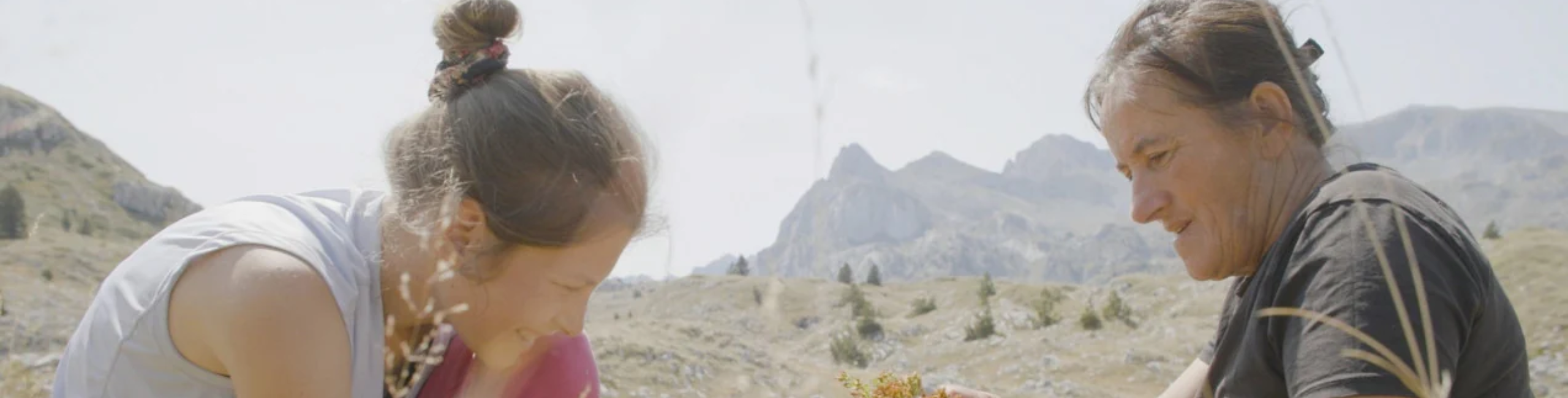
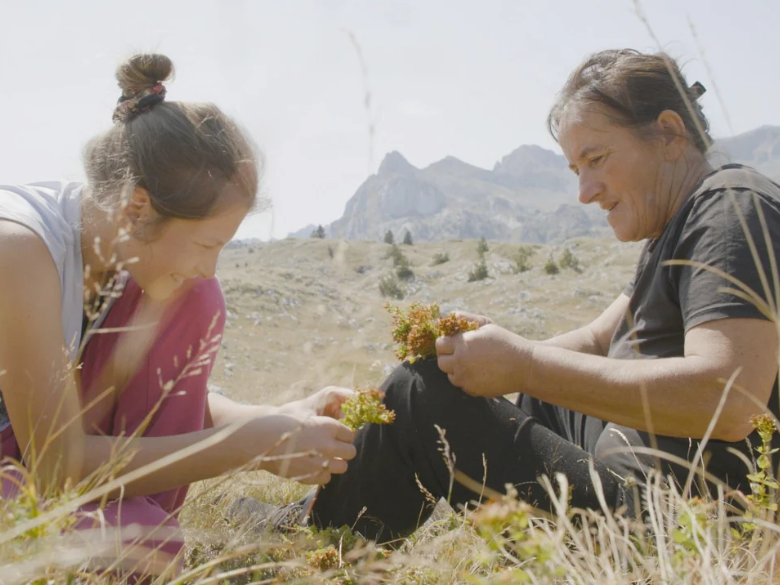
The festival will begin this Thursday, November 19 at 7:30 p.m. at the Salle Pierre-Mercure du Centre Pierre-Péladeau, with the screening of To Hold a Mountain by Biljana Tutorov and Petar Glomazić. The winner of the Grand Jury Prize at the Sundance Film Festival, this deeply feminist, anti-patriarchal, and environmental portrait takes us into the mountains of Montenegro, as a mother and daughter’s agricultural way of life is threatened by a NATO project.
Festival-goers are then invited to the Cinémathèque québécoise, RIDM’s headquarters, where numerous events and festive Late Nights will take place. Catherine Piché, one of Montreal’s first female DJs, will deliver an all-vinyl performance blending house, techno, and funk, to get the festivities underway.
DAY 2 - Friday, November 20
The second day of the festival will feature a Lesson in Cinema, presented free of charge as part of the Emerging Talent Day. As part of this activity organized in collaboration with the PCCQ, Aziz Zoromba will discuss the creative process behind his debut feature LOUF, unveiled this year at RIDM.
A number of additional free activities will be offered on Day 2, including the traditional Soirée de la relève Radio-Canada, hosted by Alexis De Lancer, during which six short documentary films by emerging local filmmakers will be screened at BAnQ.
The public is also invited to the opening of Karl Lemieux’s installation Platforms at the artist-run centre OBORO, in partnership with the National Film Board of Canada (NFB). Filmed along the Scottish coast, this experimental cinema project documents the dismantling of decommissioned oil platforms, transforming this industrial process into a sensory experience where image, sound, and material converge.
Also on the program are the first screenings of the Retrospective Bani Khoshnoudi: Territories of Memory, including the must-see The Vanishing Point. This year’s honoured filmmaker will also take part in the Regards croisés du Cinéma du Musée project, in which she will engage in dialogue with director Miryam Charles and her body of work. The feature This House (Cette maison), along with a program of eight short films, will be available to the public during the day.
Presented by Bani Khoshnoudi, a tribute screening for Lebanese filmmaker Jocelyne Saab will bring together the works Beyrouth, jamais plus and Beyrouth, ma ville. Both films will be presented in their restored versions, created from a 2K scan of the original 16mm reversal-positive work print and the 16mm magnetic audio track, from the French Film Archives.
Festival-goers will also have the chance to see the world premiere of A Zone of Echoes, a new film by director Emanuel Licha (known for zo reken, which won the Grand Prize in the National Feature Competition at RIDM 2021). This time, the feature takes us to Mexico, where women with missing loved ones embark on an artistic and cathartic exploration to confront absence, silence, and injustice. The screening will be followed by a discussion with co-writer and researcher Luis López Aspeitia, who will accompany the filmmaker.
On the international front, the festival will welcome American filmmaker Kārlis Bergs for the Canadian premiere of Weeping Rocks. With infectious enthusiasm, this film paints a portrait of entomologist Art Shapiro, a proponent of slow science who has been studying butterflies for 50 years. As for Spanish filmmaker Miguel Eek, he will be presenting his film Amílcar, a luminous, poetic essay dedicated to Amílcar Cabral, an African agronomist, thinker, and revolutionary who led the anti-colonial struggle in Guinea-Bissau and Cape Verde.
DAY 3 - Saturday, November 21
Canadian cinema will be in the spotlight on this third day of the festival. After presenting their recent works at TIFF, two Quebec filmmakers will be on hand to accompany eagerly anticipated films. Alternating between an endurance race and carefully crafted reenactments, The Ultra Runner by Mila Aung-Thwin offers an inventive portrait of Tiberiu Ușeriu, a Romanian endurance athlete and ultramarathon runner. With great verve, Ladies and Gentlemen, Brian Mulroney by Matthew Rankin freely engages with archival material to construct a psychedelic, admiring, and satirical portrait of the politician Brian Mulroney.
Presented as a world premiere, Itilli Gathering takes us to the ancestral territory of Itilli, in Nunavut, where brothers Lasaloosie and Jaco Ishulutak pass on their expertise, knowledge and culture to the younger generations of their family. Filmmakers Myna Ishulutak and Aïda Maigre-Touchet will be in attendance for the event. Indigenous cinema is once again in the spotlight this year, with seven short films from Wapikoni screening ahead of the features in the national competition.
Day 3 will feature the premieres of films that have travelled to major international festivals. Unveiled at the Locarno Film Festival, Atcha Atcha by Mamadou Dia centres on dance and its transmission, documenting the final year of training at École des Sables in Senegal. Producer Eugénie Michel-Villette will take part in a post-screening discussion with the audience. Above the Waterline, which was presented at Visions du Réel, follows an isolated community in northern Chile living without electricity and relying mainly on what the sea provides. Placing herself at the heart of this group, filmmaker Elisa Sepúlveda Ruddoff offers a nuanced portrayal of their daily lives, solidarity, and desire to live off the grid, while also seeking to give a voice to the region itself.
Also featured at Visions du Réel, Alea Jacarandas by Algerian filmmaker Hassen Ferhani (known for 143 Sahara Street, which received a Special Mention in the International Feature Competition at RIDM 2019) follows the director as he joins his father, a writer, on a poetic stroll through Algiers. Along the way, the city fosters a lyrical reflection on beauty, creation and cultural transmission. Another essential work this year is Once Upon a Time in Harlem. Filmed in 1972 by William Greaves and completed more than fifty years later by his son David Greaves, this documentary is a moving tribute to the Harlem Renaissance.
In the evening, festival-goers are invited to the Cinémathèque québécoise’s Norman-McLaren Space to attend twenty-five years swayed between our teeth, a live performance created by Sharlene Bamboat, featuring musicians Emna Mâaref, Lia Plutonic, Mili Hong, and Habib El Bardi.
DAY 4 - Sunday, November 22
On Sunday mornings, RIDM organizes family-friendly events at the Cinémathèque québécoise. This year, la lumière collective will present First Sight, a program of short films by artist and filmmaker Alisi Telengut, followed by an experimental filmmaking workshop for 5- to 17-year-olds. The public is also invited to attend a listening session presented by Radio-Canada for the podcast C’est comment? Les ados te disent la vérité, hosted by Claudie Mercier, to chat about adolescence, anxiety, and family.
Festival-goers will have the chance to experience the world premieres of two works by local filmmakers. Catherine Hébert and Elric Robichon will present We Will Not Be Silenced, which weaves together four portraits of dissident artists to tell a story about exile, resistance, and the power of writing. Meanwhile, Julian Flavin will unveil In the Sweet Arms. Narrated like a daydream in the form of a nighttime radio show, the film shows music in a rare light and questions the ways it shapes how we see the world.
From the international scene, filmmaker Deimer Quintero Vertel will attend the festival to present Our Home Was Buried in a Land We Could Never Find, an elegy that explores returning to a home fled amid the violence of rural Colombia, told through imagined archives, home movies, and war footage.
Standing out for their remarkable and innovative personal approaches, two films from the International Feature Competition will be screened on this fourth day: Foam of Worlds by Anna Marziano, and Hanabi by Ana Vaz. Also on the program are two must-see works from this year: Gabin, the debut feature by Maxence Voiseux, which premiered at the Cannes Film Festival’s Directors' Fortnight, and Citizen Osama by Ahmed Hassouna, selected to represent Palestine at the 2027 Oscars®.
DAY 5 - Monday, November 23
Monday will mark the opening of the Forum RIDM industry market, a flagship event for the documentary community. New this year: the discussions, previously reserved exclusively for Forum badge holders, will now be open to the general public for $10 per session. Festival-goers can attend a variety of talks, including #DocSafe: Sharing Best Practices for a Safer Industry and David vs. Goliath: Micro-Cinemas and Independent Exhibition Spaces, as well as a reflection on the creative possibilities of archival material with Matthew Rankin (November 24) and a filmmaking masterclass with editor Xi Feng (November 25).
On this fifth day of the festival, audiences will be able to attend the premieres of two major Quebec films, with the directors in attendance. Nowhere, Everywhere by François Jacob takes us into Alice’s creative process as she takes part in developing Hidden Paradise, a work inspired by an interview with Alain Deneault on tax havens. LOUF by Aziz Zoromba, which follows Fadi Kattan as he opens a restaurant, offers a lucid reflection on the political and activist dimensions of Palestinian cuisine. The screening will be followed by a launch event in the Norman-McLaren Space at the Cinémathèque québécoise.
Day 5 will also mark the start of Western Balkans Focus: Blurring the Lines with a program of short films including The Divine Feminine by Ivana Todorovic (Serbia), Inventory by Ivan Marković (Serbia), and Workers’ Wings by Ilir Hasanaj (Kosovo), with all three filmmakers in attendance. This Territorial Focus is presented with the support of the McGill Critical Media Lab (CML).
Two other short film programs will be presented that same day: one featuring four short films by Bani Khoshnoudi, and another comprising four entries from the international short or medium-length competition, hailing from around the world: Intersecting Memory by Shayma’ Awawdeh (France, Palestine), Fruits of Despair by Nima Nassaj (Iran), In Sum by Komtouch Napattaloong (Thailand), and Gestures to break an Image by Mayra Villavicencio (Peru).
To learn more about the 2026 program and to buy tickets: ridm.ca
PRICES - PASSPORTS AND TICKETS
RIDM Passport: $150 (Students and 65+ = $125)
Individual ticket: $15 (Students and 65+ = $12.50)
Individual ticket - Forum RIDM Talks: $10
Opening screening: $16.50
Family activity ticket: $12.50
5-ticket package: $60
The 29th annual RIDM will take place from November 19 to 29, 2026.
at the Cinémathèque québécoise, the Maison Théâtre, Cinéma du Parc, Cinéma du Musée, the National Film Board of Canada (NFB), BAnQ, the Concordia Auditorium, the artist-run centre OBORO, the artist-run centre daphne, and the Centre Pierre-Péladeau.
Information: ridm.ca / info@ridm.ca
Follow RIDM on Facebook - Instagram - Bluesky - Letterboxd - TikTok
-30-
For interview requests, screener links or press materials, please contact:
Caroline Rompré | pixelleX communications | 514-778-9294 | caroline@pixellex.ca
All 2026 Press Releases: ridm.ca/en/press/press-
Media space / downloads (poster, trailers, photos, excerpts, etc.): ridm.ca/en/press/downloads